
 Go back
Heritage vs. Positioning: How Swiss Watchmakers Use Sport Sponsorship
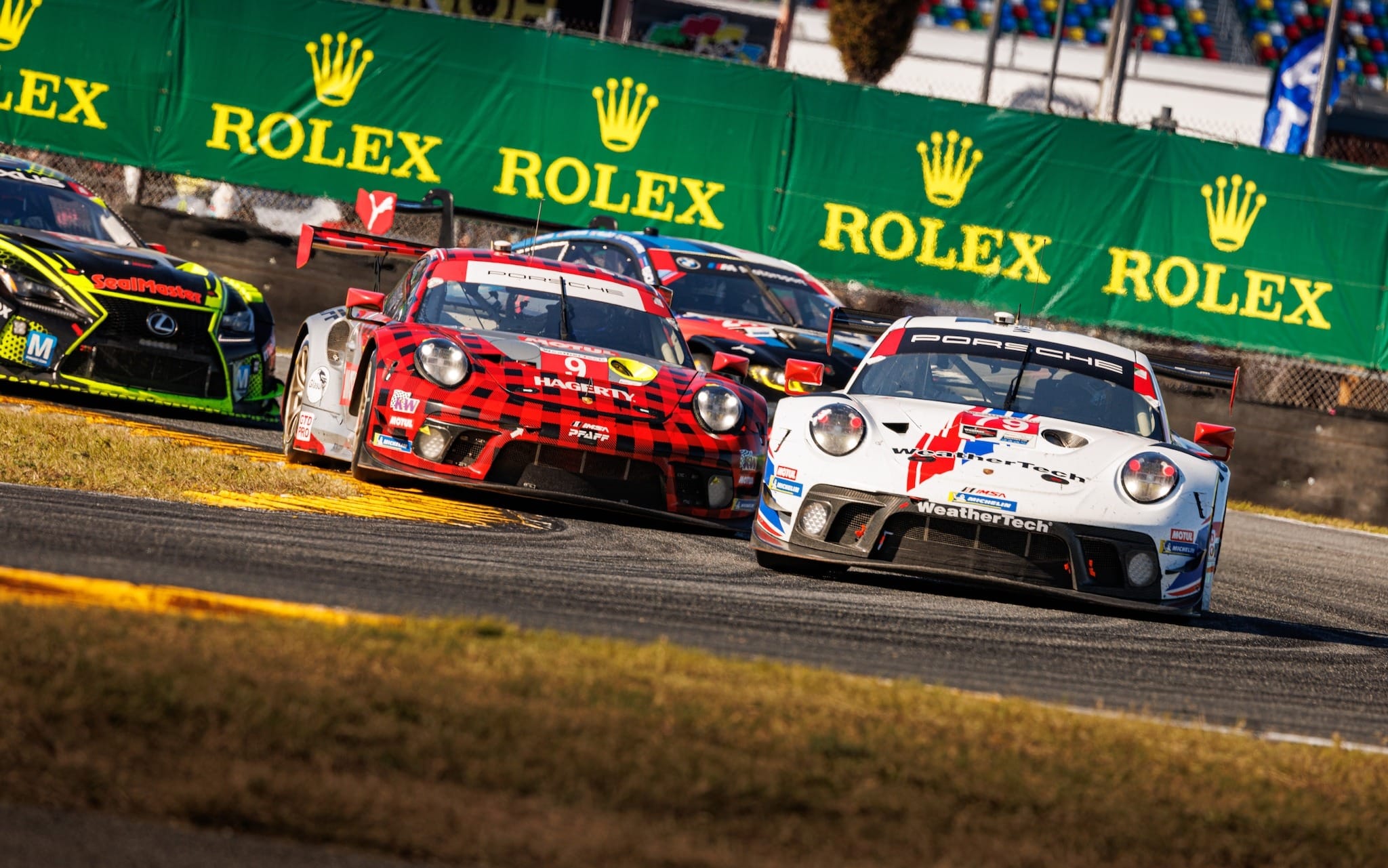
Watch brands have backed sporting and human feats since the early 1900s: Mercedes Gleitze’s 1927 Channel swim wearing a Rolex Oyster, early motorized flight (Cartier), the first ascent of Everest (Rolex), the exploration of the ocean depths (Rolex and Blancpain) and the conquest of space (Omega). Many of these “firsts” are still debated by historians, such as which watch Edmund Hillary actually wore on the summit of Everest.
Sponsorship is an effective tool for watch brands, whether to craft a distinct image or to double down on their heritage.
In this post, we look at the sponsorship strategies the watch industry uses to build awareness, shape brand image and, ultimately, drive sales. Image is a means, not an end: what brand managers are truly after is sales, even if, in luxury, the payoff is measured over years rather than quarters. But first, a bit of history.
The quartz crisis and industry consolidation
The quartz crisis was the collapse of the traditional Swiss watch industry in the 1970s and early 1980s, when cheaper and more accurate quartz watches, mostly from Japan, overturned a market the Swiss had long dominated.
Swiss watch industry employment fell from roughly 90,000 people around 1970 to about 30,000 by the mid-1980s. The number of companies fell from about 1,600 to about 600.
The industry that emerged was consolidated and more integrated. It repositioned the mechanical watch as a premium or luxury object, painstakingly handcrafted by highly skilled watchmakers. Bringing expertise under one roof also accelerated the move to in-house movements, which raised perceived quality and separated true luxury and fine watchmaking from brands producing fashion accessories.
The largest players
Most luxury watch brands now belong to a handful of groups formed in the wake of the quartz crisis.
Swatch Group. Built directly out of the crisis, it covers the entire price range: Breguet, Blancpain and Glashütte Original at the top; Omega and Longines in the premium tier; Rado, Tissot, Hamilton and Mido in the middle; and Swatch at entry level.
Richemont. A jewelry-led group, with Cartier and Van Cleef & Arpels as its engines. Its watch brands sit at the top end: Vacheron Constantin, A. Lange & Söhne, Jaeger-LeCoultre, IWC, Panerai, Piaget and Roger Dubuis.
LVMH. Its watch brands include TAG Heuer, Hublot, Zenith, Bulgari, Tiffany and Louis Vuitton, and it has revived names like Gérald Genta and Daniel Roth.
Independents. Major independent watchmakers include Rolex (and its sister brand Tudor), Patek Philippe, Audemars Piguet, Chopard, Richard Mille and Breitling (which acquired Universal Genève in 2023), among others.
This structure shapes sponsorship: each group must give each of its brands a territory of its own, as we will see below.
A watch is much more than a watch
Since the quartz crisis, a $20 watch keeps better time than a $200,000 one. A luxury watch no longer sells accuracy: it sells meaning, through status, craftsmanship and a story the owner buys into.
Sponsorship is one of the most powerful ways to build that story. By associating with a sport or a feat, a brand claims a territory, a set of values and images it wants to own in people’s minds.
Watchmakers build these territories in two distinct ways: by drawing on their history (heritage-driven) or by choosing them for the image and audience they want to reach (positioning-driven).
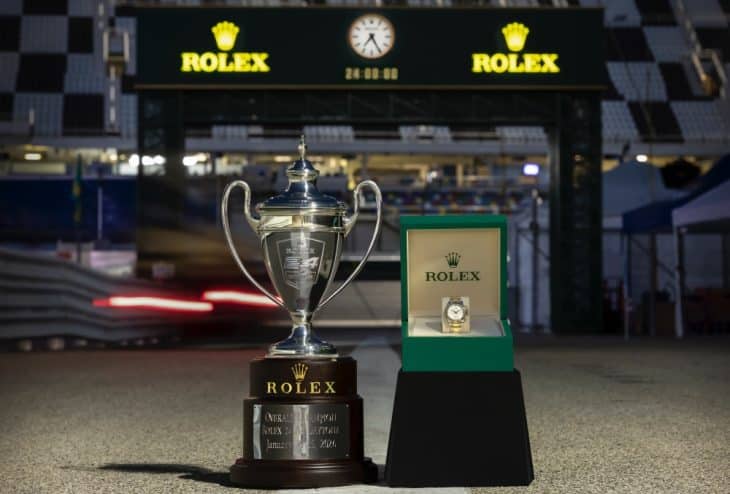
Heritage-driven
The first strategy relies on brand history to anchor associations with a territory. Most historic watch brands magnify a slice of their past, sometimes an anecdotal one, to amplify the legend. These are links built over decades, whether they began with a product, a quirk of history, a founder’s passion or an early marketing move.
The industry is full of examples: Longines with equestrian, Omega with the Olympics, Breitling with aviation, and TAG Heuer and Chopard with motorsport. Most of these long-standing associations emerged from a product designed for a specific purpose.
Breitling’s connection to aviation, for instance, comes from its specialization in chronographs, starting in the late 19th century, followed by the cockpit instruments it built in the 1930s and 1940s.
Positioning-driven
By contrast, a territory can be chosen with no historic link to the brand, sometimes by a brand with no long history at all.
NORQAIN, founded in 2018, is aligned with hockey because one of its co-founders, Mark Streit, is a former NHL defenseman and the first Swiss player to captain an NHL team.
Hublot, founded in 1980, had no sporting heritage. Under Jean-Claude Biver, it bet on football’s global reach to embody its “Art of Fusion” positioning, becoming official timekeeper of the FIFA World Cup from 2010 to 2022. Football remains central to the brand: Hublot has been the official watch of the UEFA Champions League since 2015.
Richard Mille, founded in 2001, positions its watches as feats of extreme engineering: ultra-light and shock-resistant enough to be worn during competition. Rather than tie itself to one sport, it picks athletes whose sport can prove the point, from Rafael Nadal, who won Grand Slam titles wearing a watch of about 20 grams, to Tadej Pogačar and Mathieu van der Poel on the cobbles of Paris-Roubaix.
Audemars Piguet has no historic connection to golf, but built a “Dream Team” of golf ambassadors and private tournaments to reach an affluent clientele.
Some heritage brands are repositioning too. Breitling has broadened from aviation to “Air, Land and Sea,” moving into surfing, triathlon and cycling. Tudor’s “Born to Dare” strategy led it to create its own pro cycling team.
Even the most storied brands mix both strategies. Rolex has no historic connection to golf or tennis, but chose these sports for their prestige and affluent audiences.
Luxury conglomerates and multi-brand strategies
A portfolio of brands needs distinct territories and matching partnerships, managed like any other portfolio.
Groups divide sports among their brands. Within the Swatch Group, Omega has the Olympics, Longines has equestrian and Tissot has mass-audience sports, with little overlap. LVMH does the same, with TAG Heuer in Formula 1, Hublot in football and Zenith in adventure.
Is it effective?
When it is well executed and sustained over time, a sponsorship can deliver real returns: awareness, desirable brand attributes, affinity and consideration. Partnerships also extend into digital and traditional advertising, which amplifies their impact. And fans notice: according to Elevent’s latest Perspectives study, 72% of surveyed sports fans agree that sponsorship improves a brand’s image.
Sponsorship also drives purchases, especially among the most passionate fans. In the same study, die-hard fans were 2 to 2.8 times more likely than occasional fans to have bought a sponsor’s product or service, across all five properties tested, including the NHL, MLS, the National Bank Open, the CFL and the Canadian Grand Prix. Among the most engaged fans, up to 48% reported such a purchase. The intensity of the bond, not reach alone, drives the purchase.
Each approach has its strengths. Heritage-driven sponsorships carry more credibility and longevity, because the story is authentic and hard to copy. Positioning-driven sponsorships are faster to deploy and can target a specific audience, but they rely more on activation and on athletes to feel legitimate.
Brands are also scrutinizing returns more closely. In 2025, Hublot chose not to renew its 16-year FIFA World Cup partnership, citing cost-benefit considerations, while keeping its UEFA Champions League deal. Even the most visible sponsorship has to earn its place.
So is one better than the other? There is no single winning formula: Rolex combines both, Richard Mille built a billion-franc brand on positioning alone, and Patek Philippe barely sponsors sport at all. What matters is fit with the brand, consistency over time and the depth of the bond with fans. But awareness and image are only means to an end. Ultimately, a sponsorship has to sell watches, even if in luxury the payoff builds over years, through desirability, pricing power and client loyalty. The key is measuring how each platform moves people from awareness to purchase.
At Elevent, we help brands and rights holders measure the value of their sponsorships. Get in touch to find out what yours is really worth.