
 Go back
How LEGO, Disney and EA are relying on Through-the-Line sponsorship strategy to achieve success in Formula 1
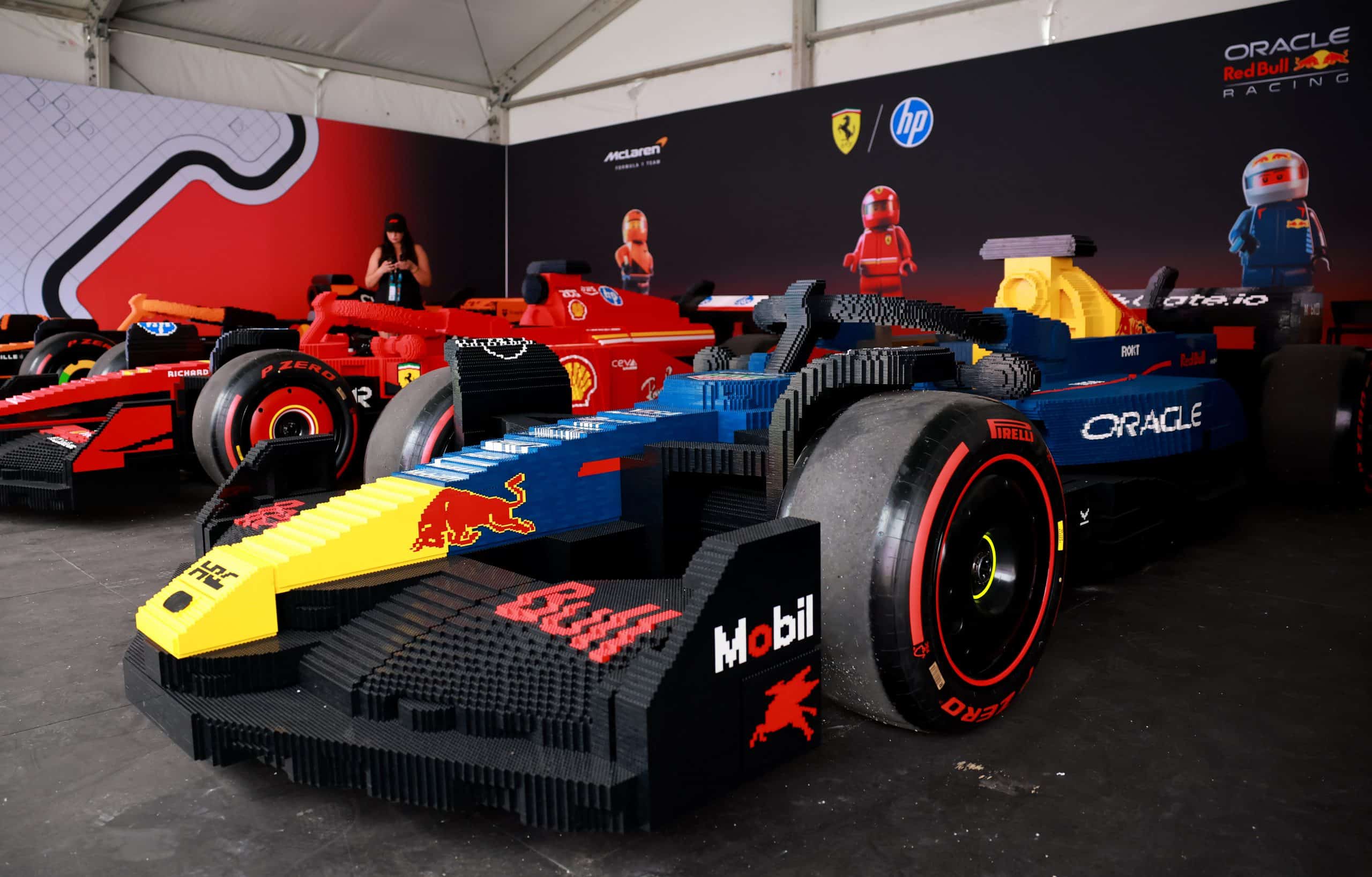
Like most global sports, Formula 1 and its racing teams have to work with a limited asset inventory. To maximize revenue, the sport has relied on below-the-line partnerships for years, letting sponsors focus on initiatives that strengthen these relationships — on-site activation, hospitality, content, and promotional rights — rather than compete for the limited, high-value space on the car or trackside that delivers global reach.
Key points:
- F1’s limited on-car and trackside inventory has pushed brands toward below-the-line strategies — activation, hospitality, content, and promotional rights — rather than competing for scarce visible space.
- The highest sponsorship tier isn’t automatically the right fit — smaller, more targeted partnerships can deliver more relevant value for brands with strong existing consumer equity.
- There’s a real risk of diluting or overshadowing marquee partners (Heineken, AMEX, Pirelli, etc.) if lower-tier activations get too much spotlight — rights holders need to manage structure and pricing carefully to avoid that friction.
- Sponsorship should be evaluated as a sales lever, not just an awareness or branding tool.
Under Liberty Media’s ownership, Formula 1 management has been keen to bolster its Global Partnership roster (the highest level of association), while also exploring newer, smaller, and less conventional partnerships.
Brands are being creative and working with minimal visibility while engaging fans.
In that context, partners like Lego, Disney and EA Sports stand out.
These three brands rely on subtler cues that keep their partnerships visible throughout the year, in contrast to F1 Global Partners’ ubiquitous trackside advertising and in-broadcast integration.
In this post, we will explore these innovative F1 partnerships and why they work, look at the broader sponsorship landscape and conclude with managerial implications for both brands and rights holders.
LEGO x F1
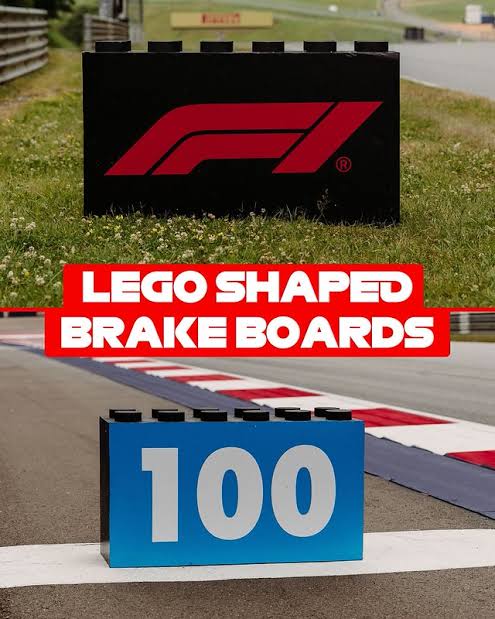
To the untrained eye, nothing stands out: the F1 logo appears on a break marker board, the panels used to signal drivers how much distance remains before a corner.
If you look closely, you will notice 12 studs on the top, transforming the board into Lego’s famous brick.
No logo.
Brilliant.
Of course, there’s also more explicit brand expression, designed for maximum impact during key moments of the season. For example, Lego created big moments such as the 2025 Miami driver parade, with full-size, two-seater Lego cars that drivers actually raced (Lego pieces flying off as drivers merrily bumped into each other). The 2025 Silverstone trophy made of Lego and the 2025 Vegas pink Lego Cadillac are other examples. Even in lower categories, F1 Academy — the all-female championship — has a Lego-sponsored car you can buy (which I had to get for my daughter!).
Why is the F1 LEGO partnership interesting?
The partnership is a multi-level, always-on program — merchandise tailored to fans of different ages, content, on-site activation, and special F1 events at select Legoland Discovery Centers and Legoland theme parks.
It’s rare for activations to be tied directly to sales, especially on event grounds. I was skeptical at first, but I kept running into fans carrying their massive yellow Lego bags at races!
Very few sponsors outside a specific category can directly link sales to their investment, and what LEGO achieved on that front is genius.
Disney x F1
While Disney-owned ESPN’s F1 broadcast deal in the US ended when Apple TV took over, the two companies agreed to a separate multi-year partnership through 2028.
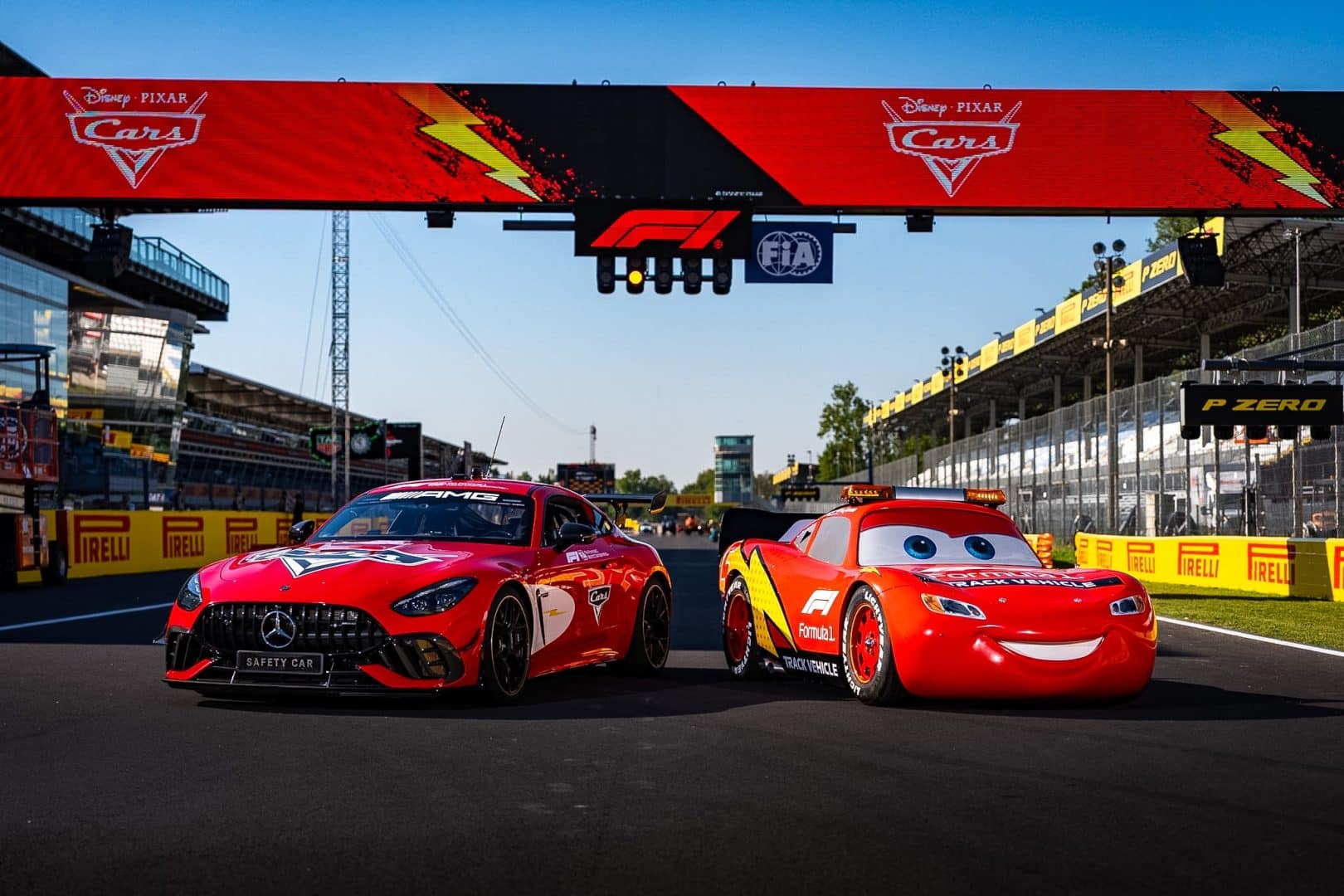
Dubbed the Fuel the Magic program, the partnership includes Mickey & Friends and Pixar’s Cars branding, exclusive merchandise, at-track activation at US races, and TV-visible content — such as Mickey Mouse’s appearance at the Disney-themed post-race show in Las Vegas, in front of the famous Bellagio hotel. Disney is also involved with the F1 Academy.
Why is the F1 Disney partnership interesting?
With Formula 1’s growing popularity among a younger, more diverse audience, and with three races now held in the US, there’s a natural tie-in with these massive entertainment and hospitality companies.
Disney usually sits on the property side, and as one of the most valuable licensing brands in the world, this co-branding initiative brings excitement and attention to both parties — through unique co-branded products and other opportunities to feature Disney’s IP, especially the natural tie-in with the Cars franchise.
EA Sports x F1
EA Sports is deeply involved in Formula 1 through official video game development, team and driver sponsorships, and cross-promotional entertainment partnerships.
Their brand integration during the F1 broadcast is subtle, yet effective.
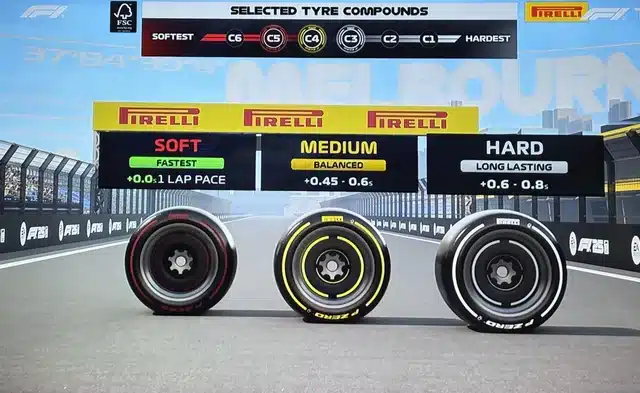
Each race has a specific range of Pirelli tire compounds — soft (red), medium (yellow), and hard (white).
During the race intro, the broadcast shows an in-game presentation of the tire compounds, with a backdrop of the current race pulled directly from EA’s Formula 1 game. The EA logo appears as trackside advertising in the background.
Why is the EA partnership effective?
EA is already well known as the publisher of the official F1 game, and it also partners with Red Bull Racing and driver Max Verstappen. This simple cue speaks directly to an audience with an interest in video games, while also building general awareness and familiarity with the EA brand and F1 game.
Simple and effective.
Sponsorship Management
Global F1 partners and major teams’ sponsors may give brands large, global visibility, but that alone won’t win the hearts of fans.
A good mix of above- and below-the-line approaches can be used effectively in most partnerships, with the right use of promotional rights, category exclusivity, content, and opportunities for unique experiences.
While some global partners are more memorable than others — Heineken, AMEX, Nestlé (Kit Kat), LVMH (Louis Vuitton and TAG Heuer), and Pirelli among them — lower-tier partners can stand out even more with clever use of their assets.
The lessons from LEGO, EA, and Disney offer relevant examples for brands looking to stand out in a sports environment that can often feel cluttered.
Is there a risk to this strategy?
Some of the main global sponsors may feel overshadowed by brands with a much smaller investment. The same can happen at smaller events — for example, if an activation space is sold as a stand-alone for a much lower price, main partners can end up diluted.
There are benefits to the sport that can justify the risk of upsetting higher-paying partners. The buzz around these “lovemarks” creates even more value for existing partners, thanks to the positive brand halo that rubs off on other sponsors.
It can also drive awareness of the sport among new audiences, potentially converting more fans.
Rights holders and event promoters need to manage their sponsorship structure and pricing strategy carefully to avoid creating friction between partners.
Managerial Implications
For rights holders
Adding more assets to the inventory isn’t the only way to grow sponsorship revenue — there’s also real value in creative partnership structures, such as unique initiatives, collaborations between sponsors, or bespoke experiences.
It can make sense to bring in a brand at a smaller investment level for the positive trade-off it offers, but the boundaries need to be well-defined — by market, by time window, or by activation type — to protect the rights of your most important and lucrative partners.
Pitching these ideas to larger partners in advance — outlining the upside and securing their buy-in — is the better way to protect those valuable relationships.
For brands
The highest sponsorship level may not be the best fit for a brand’s needs — or its budget. The most exclusive tiers make sense for brands looking to make a statement, for global recognition, or to build awareness around a new product or category. For others, a lower tier may be better match for their goals.
Shared objectives, building value in partnership
For already strong consumer brands like Lego, Disney, and EA, smaller tiers may be more in line with their objectives, and they bring plenty of shared value to the table. But smaller, less established brands shouldn’t shy away from having a conversation with rights holders about shared value creation — through activation spend, use of IP, or co-branded products.
Think of sales!
Sponsorship can absolutely tackle communication and marketing objectives — it’s still widely seen as an awareness tool or a brand play. Yes, it can achieve that, but sales shouldn’t be left out as an objective. You may not be selling products directly at your activation booth, but influencing purchase intent, driving recommendations, or generating post-event conversion is entirely feasible and should be a desired outcome.
Respect the fan
When esports were becoming more popular, there was an underlying factor to sponsorship success: speak the fans’ language, be in on the joke, and seek integration instead of sticking out like a sore thumb. The same applies to most sponsorships — brand integration and activation have to respect the passion fans have for the sport, team, or event.
Fans span different engagement levels, from casual to die-hard, and different generations. LEGO understood this and leveraged it with its multiple lines of F1 products.
While LEGO is in a league of its own in terms of brand reputation and global reach, its activation strategy is best in class, and there are lessons in it for F1 Global partners and sponsors in general.
If you’re a tier-1 sponsor — or at any level, really — don’t rely solely on above-the-line assets, regardless of the property’s size: tell stories, create content, and activate to connect with fans and audiences.
As some sponsorships and activations can feel stale or overdone (please, not another photo booth!), these partnerships stand out for their relevance and cleverness.
Below-the-line assets don’t need a scoreboard-sized budget to work — they need relevance, creativity, and respect for the fan. LEGO, Disney, and EA show what’s possible when brands earn their place in the sport instead of simply buying visibility for it, and it’s a playbook other rights holders and sponsors, in F1 and beyond, would do well to study. If you’re working through your own sponsorship strategy and want a second pair of eyes, reach out — that’s exactly the kind of work we do at Elevent.
About the author
Francis Dumais, managing partner at Elevent, a sponsorship intelligence firm, helps brands streamline the management and measurement of their sponsorship portfolios. As part of his master’s thesis, he embarked on a two-year research project to document how top Formula 1 teams and races managed sponsorships. This research led to the creation of the Sponsorship Value Creation Model.
Sources:
https://www.lego.com/en-us/aboutus/news/2025/october/lego-f1-miami-drivers-parade-special-trailer
https://thewaltdisneycompany.com/news/formula-1-extension-pixar-cars/
https://www.formula1.com/en/latest/article/formula-1-and-the-lego-group-ramp-up-the-fun-with-exciting-at-race.5KX6KX5LhfUbruuaIbcEKE